Aquaculture is becoming one of Kenya’s fastest-growing agricultural enterprises as demand for fish continues to outpace local supply. With increasing awareness of healthy diets, population growth, urbanization, and government support for the blue economy, more farmers and investors are exploring fish farming as a viable agribusiness. However, one of the first and most important decisions any prospective fish farmer must make is whether to invest in cage farming or pond farming.
Each production system offers unique advantages, challenges, and investment requirements. The right choice depends on factors such as available land or water resources, capital, target markets, management capacity, and long-term business objectives. A system that performs well for a commercial investor operating on Lake Victoria may not be suitable for a smallholder farmer in Nyeri or Machakos.
Understanding the differences between cage farming and pond farming helps producers make informed investment decisions while reducing production risks. Whether you are planning to raise tilapia, catfish, or other freshwater species, selecting the right production system lays the foundation for a productive and sustainable aquaculture enterprise.
Understanding Kenya’s Aquaculture Landscape
Fish farming in Kenya has evolved significantly over the past two decades. While earthen ponds remain the most common production system across the country, cage farming has expanded rapidly, particularly around Lake Victoria, where counties such as Homa Bay, Kisumu, Siaya, Migori, and Busia have become major aquaculture hubs.
Pond farming is also widespread in counties including Kiambu, Kirinyaga, Murang’a, Embu, Meru, Kakamega, Kisii, Nyeri, Nakuru, Uasin Gishu, and parts of Eastern Kenya where farmers have access to suitable land and reliable water sources.
The growth of supermarkets, hotels, restaurants, institutions, and fish processors has strengthened market demand for consistent supplies of quality fish. This increasing demand has encouraged producers to adopt production systems that improve efficiency while maintaining high standards of fish health and food safety.
What Is Pond Farming?
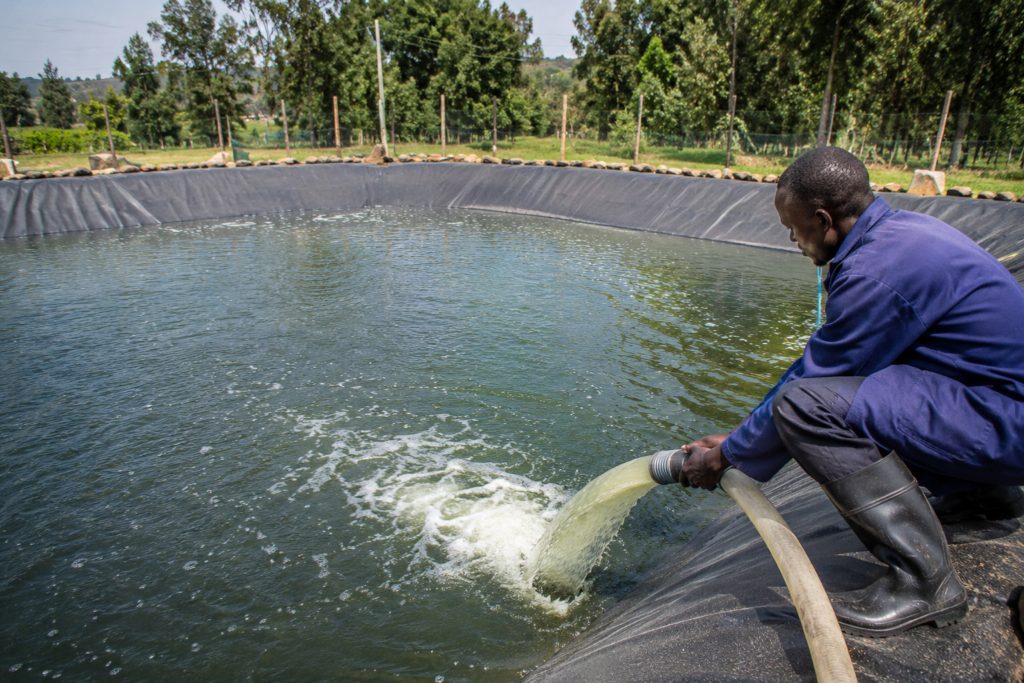
Pond farming involves raising fish in man-made ponds constructed using soil, concrete, or lined materials such as high-density polyethylene (HDPE). Most Kenyan fish farmers use earthen ponds because they are relatively affordable and can support natural food production alongside formulated feeds.
Ponds are designed to retain water while allowing farmers to manage stocking density, feeding, water quality, harvesting, and disease control. Depending on the available space, farms may operate several ponds to separate fingerlings, juveniles, and market-size fish.
Tilapia remains the dominant species in pond culture, although African catfish is also widely farmed due to its fast growth and tolerance to varying water conditions.
Advantages of Pond Farming
One of the biggest strengths of pond farming is the high level of control farmers have over the production environment. Water levels, feeding schedules, fertilization, and harvesting can all be managed with relative ease.
Ponds also provide better opportunities for beginners to learn fish husbandry without dealing with the additional environmental complexities associated with open water systems.
Another important advantage is biosecurity. Since ponds operate within a controlled environment, farmers can reduce the introduction of diseases by managing water sources, limiting visitor access, disinfecting equipment, and controlling fish movements.
Harvesting is generally simpler because ponds can be partially or completely drained, allowing fish to be collected efficiently while minimizing stress and injury.
Integrated farming is another major benefit. Many Kenyan farmers combine fish ponds with vegetable production, poultry, dairy farming, or irrigation systems. Nutrient-rich pond water can improve crop production while agricultural by-products help reduce feed costs.
Challenges of Pond Farming
Although pond farming offers excellent management control, it requires suitable land with soils capable of retaining water. Areas with highly sandy or rocky soils may require expensive pond liners or concrete construction.
Water availability is another critical factor. Fish require consistent water quality throughout the production cycle, meaning farmers need dependable rivers, boreholes, dams, springs, or rainwater harvesting systems.
Production capacity may also be limited by available land. Expanding pond operations often requires acquiring additional acreage, increasing construction costs and operational expenses.
Poor pond management can also lead to oxygen depletion, water quality deterioration, excessive algae growth, or disease outbreaks if stocking densities become too high.
Understanding Cage Farming
Cage farming involves raising fish inside floating net enclosures installed in natural water bodies such as lakes, reservoirs, or large dams. The cages allow water to flow freely while keeping fish securely contained.
Kenya’s cage farming industry is concentrated primarily on Lake Victoria, where favorable water conditions support commercial tilapia production throughout much of the year.
Modern cages are typically constructed using durable polyethylene nets supported by floating frames made from high-density plastic or galvanized steel. Depending on farm size, operations may consist of a few cages or hundreds of production units managed as commercial farms.
Advantages of Cage Farming
One of the biggest advantages of cage farming is its ability to produce large volumes of fish without requiring extensive land ownership. Farmers utilize existing water resources rather than constructing ponds.
Natural water circulation continuously replenishes oxygen while flushing waste away from cages, reducing some of the water management responsibilities associated with pond farming.
Commercial cage farms can also achieve higher stocking densities than traditional ponds when properly managed, resulting in increased production per unit of space.
Expansion is often easier. Instead of constructing new ponds, producers can add additional cages as market demand grows and capital becomes available.
Labor efficiency is another advantage. Feeding, grading, monitoring, and harvesting can often be organized more efficiently across multiple cages using standardized management practices.
Challenges of Cage Farming
Despite its production potential, cage farming presents several technical and environmental challenges.
Farmers have limited control over water quality because they depend on the surrounding lake or reservoir. Pollution, seasonal temperature changes, algal blooms, and declining oxygen levels can directly affect fish health.
Extreme weather conditions, including strong winds and storms, may damage cages or increase fish stress.
Predators such as birds and otters may attack cages if protective measures are inadequate. Net damage can also result in fish escapes, causing financial losses.
Disease management is generally more complex because pathogens can spread more easily through shared water bodies, particularly where many farms operate close together.
Cage farming also requires compliance with environmental regulations and responsible site selection to minimize ecological impacts.
Comparing Investment Requirements
The capital required depends on the scale of production, infrastructure quality, and management approach.
Small earthen ponds generally require investment in excavation, water supply systems, inlet and outlet structures, fencing, nets, storage facilities, and basic equipment. Lined ponds or concrete tanks significantly increase establishment costs.
Cage farming often requires purchasing floating cages, anchors, flotation devices, boats, safety equipment, feeding platforms, and secure landing sites. Initial investment can therefore be substantial, particularly for commercial operations.
In both systems, recurring operational expenses include fingerlings, feeds, labor, transport, equipment maintenance, and harvesting costs.
Quality fingerlings for Nile tilapia typically retail at approximately KSh 8 to KSh 20 per fingerling, depending on size, hatchery, genetics, and transport distance. African catfish fingerlings commonly range from KSh 5 to KSh 15 each.
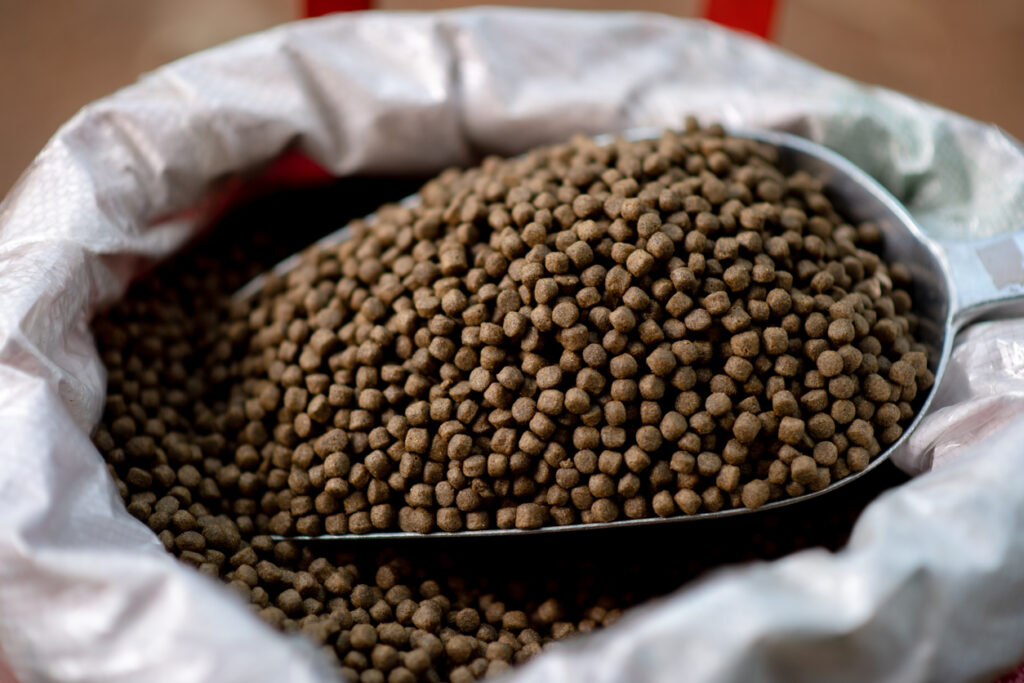
Feed remains the largest production expense, often accounting for 50–70% of total operating costs. Commercial floating fish feeds generally cost between KSh 90 and KSh 180 per kilogram, depending on feed formulation, protein content, brand, and purchase volume.
Fish Growth and Productivity
Both pond and cage systems can produce excellent results when managed properly.
Cage farming often supports faster growth because fish experience continuous water exchange and stable oxygen availability. However, this advantage depends on maintaining suitable stocking densities and consistent feeding.
Pond productivity depends heavily on water quality management, fertilization practices, feed efficiency, and proper stocking rates.
Under good management, tilapia may reach market size of approximately 300 to 500 grams within six to eight months, although growth rates vary depending on feed quality, water temperature, genetics, and overall farm management.
Water Quality Management
Water quality is fundamental to successful aquaculture regardless of production system.
In pond farming, producers routinely monitor dissolved oxygen, pH, temperature, ammonia, and water transparency while managing aeration and periodic water exchange where possible.
Cage farmers monitor similar parameters but have fewer options to correct unfavorable environmental conditions because they depend on natural water bodies.
Good site selection therefore becomes essential for cage operations. Areas with adequate water depth, moderate currents, and minimal pollution generally provide better production outcomes.
Disease Prevention and Biosecurity
Disease prevention should always take precedence over treatment.
Pond farmers benefit from stronger biosecurity because access to ponds can be controlled more easily. New fingerlings can be sourced from reputable hatcheries, equipment disinfected regularly, and ponds dried between production cycles if necessary.
Cage farmers rely heavily on careful monitoring because disease outbreaks in open water environments can spread rapidly.
Common fish health problems in Kenya include bacterial infections, parasitic infestations, fungal diseases, and stress-related conditions resulting from poor water quality or overcrowding.
Routine observation, proper nutrition, quality seed, and good hygiene remain the most effective disease prevention strategies.
Market Opportunities for Both Systems
Kenya continues to experience a significant gap between fish demand and domestic production, creating opportunities across multiple market segments.
Fresh whole fish remain popular among households, while hotels, restaurants, schools, hospitals, supermarkets, and institutional buyers increasingly seek reliable suppliers capable of delivering consistent quality throughout the year.
Depending on size, season, and location, farm-gate prices for fresh whole tilapia commonly range from approximately KSh 380 to KSh 650 per kilogram, while retail prices in urban markets often exceed KSh 600 to KSh 900 per kilogram.
Premium-sized fish, value-added products, fillets, smoked fish, chilled fish, and vacuum-packed products may command higher prices where quality standards and cold chain management are maintained.
Environmental Sustainability Considerations
Responsible aquaculture depends on balancing production with environmental stewardship.
Pond farmers should minimize water wastage, prevent effluent pollution, manage sediments responsibly, and avoid excessive chemical use.
Cage operators should carefully manage feeding to reduce nutrient pollution, regularly inspect cage integrity, and avoid overstocking that may compromise water quality.
Both systems benefit from responsible feed management, proper waste disposal, and adherence to national environmental regulations. Sustainable practices not only protect aquatic ecosystems but also strengthen long-term business resilience and consumer confidence.
Which Farming System Is Right for You?
There is no universal answer because every farm operates under different conditions.
Pond farming is generally well suited to smallholder farmers, beginners, educational institutions, and integrated farms with access to land and reliable water supplies. It provides greater production control and allows farmers to develop practical husbandry skills before expanding operations.
Cage farming is often more appropriate for experienced producers, commercial investors, cooperatives, and enterprises with access to suitable lakes or reservoirs. It offers opportunities for larger-scale production but requires stronger technical management, higher initial investment, and close environmental monitoring.
Ultimately, success depends less on the production system itself and more on sound management, quality fingerlings, balanced nutrition, effective biosecurity, and access to reliable markets.
Key Considerations Before Investing
Before choosing either system, prospective farmers should evaluate land or water access, environmental suitability, production goals, available capital, technical expertise, labor requirements, market access, and regulatory obligations. Conducting a realistic business plan and seeking technical guidance can significantly reduce investment risks and improve long-term profitability.
Regardless of whether fish are raised in ponds or cages, sustainable aquaculture requires careful planning, continuous learning, and responsible resource management. Kenya’s growing blue economy presents considerable opportunities for farmers and agribusinesses that prioritize quality production, environmental stewardship, and market-driven operations.
As Kenya continues expanding domestic fish production to meet rising demand, both pond farming and cage farming will play complementary roles in strengthening food security, creating employment, and supporting resilient aquatic food systems.
Supporting Kenya’s Sustainable Aquaculture Future
Building a successful aquaculture enterprise is about more than producing fish—it involves adopting responsible farming practices, maintaining high quality standards, and responding to changing market needs. Whether you choose pond farming or cage farming, long-term success depends on informed decision-making, sound farm management, and a commitment to sustainability.
Across Kenya’s fisheries value chain, organizations such as Rio Fish continue to contribute to sustainable aquaculture through quality fish products, farmer partnerships, responsible sourcing, and stronger market linkages that benefit producers and consumers alike.
To learn more about Rio Fish’s products, farmer partnerships, business solutions, and sustainable aquaculture initiatives, visit www.riofish.co.ke or contact the Rio Fish team for more information.