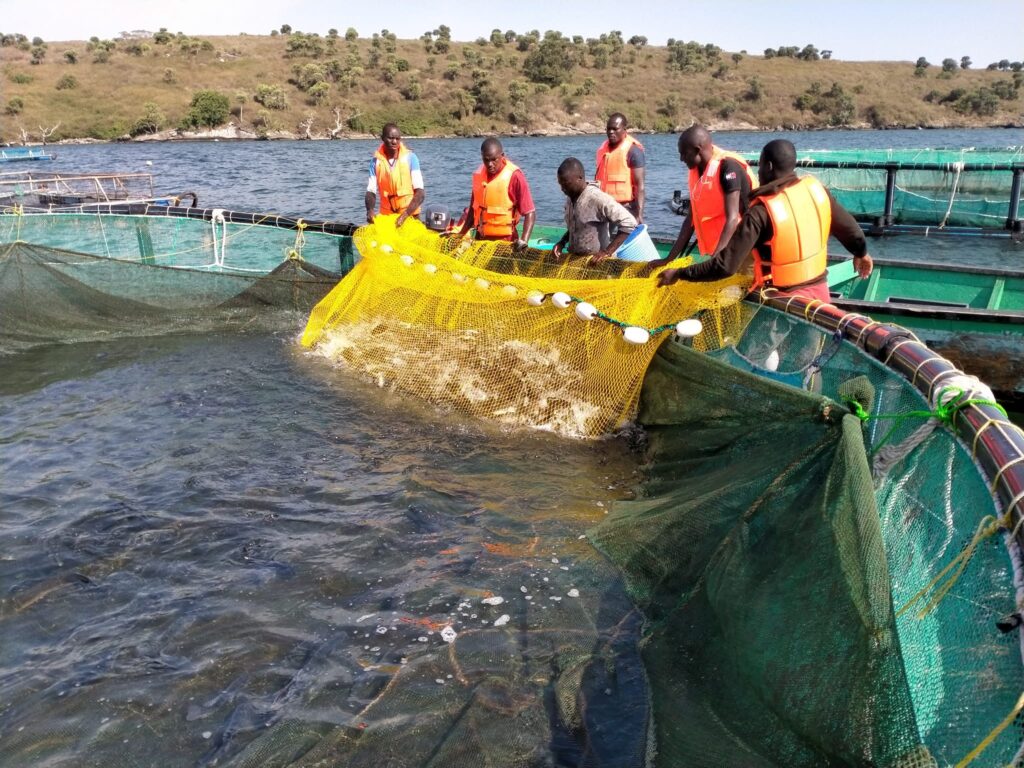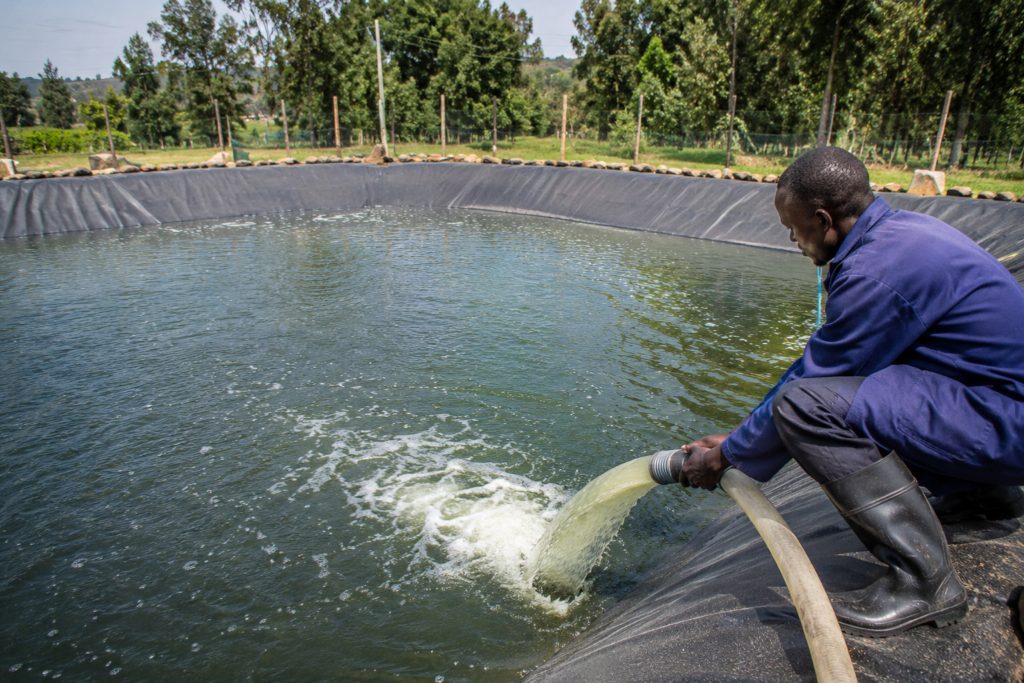
Fish feed is one of the most important factors determining the success of any aquaculture enterprise. Whether raising tilapia in earthen ponds, catfish in tanks, or fish in cages on Lake Victoria, proper nutrition directly influences growth rates, feed efficiency, fish health, production costs, and overall profitability.
In Kenya, feed accounts for the largest share of operating expenses in fish farming, often representing 50% to 70% of total production costs. As a result, selecting the right feed is not simply a nutritional decision—it is also a critical business decision. Poor-quality feed can slow growth, increase feed wastage, raise production costs, and reduce farm profitability, while high-quality feed supports faster growth, better survival rates, and improved harvest yields.
Understanding how fish feeds are formulated, when to use different feed types, and how to feed fish correctly enables farmers to maximize returns while promoting sustainable aquaculture practices.
Why Fish Nutrition Matters
Like all animals, fish require a balanced diet to grow, reproduce, resist diseases, and efficiently convert feed into body weight. Unlike wild fish that forage naturally, farmed fish depend almost entirely on the nutrition provided by farmers.
A well-balanced diet supports:
- Faster and more uniform growth
- Improved feed conversion efficiency
- Strong immune systems
- Better survival rates
- Improved flesh quality
- Higher market value
Nutritional deficiencies, on the other hand, may result in slow growth, poor feed utilization, deformities, weakened immunity, and increased susceptibility to disease.
The Essential Nutrients Fish Need
Fish require a combination of nutrients that work together to support healthy development.
Protein
Protein is the most important nutrient in fish feed because it provides the amino acids needed to build muscles, organs, enzymes, and tissues.
Young fish require higher protein levels than mature fish because they are growing rapidly. Fingerlings generally perform best on feeds containing approximately 35% to 45% crude protein, while grow-out tilapia often require 25% to 32% protein, depending on their size and production stage.
Protein sources commonly used in commercial fish feeds include fish meal, soybean meal, sunflower seed cake, cottonseed meal, insect protein, and other plant-based ingredients.
Energy
Fish obtain energy primarily from carbohydrates and fats. Adequate energy allows protein to be used for growth instead of being burned as fuel.
Feeds with insufficient energy force fish to use valuable protein for metabolism, reducing growth performance.
Fats
Healthy fats provide concentrated energy while supplying essential fatty acids required for normal growth, reproduction, and cell function.
Certain fatty acids also contribute to improved fish health and flesh quality.
Vitamins
Fish require vitamins in relatively small amounts, but they play vital roles in metabolism, immunity, reproduction, and tissue repair.
Common vitamins added to commercial feeds include vitamins A, D, E, K, C, and the B-complex group.
Minerals
Minerals support bone formation, enzyme activity, nerve function, and healthy metabolism.
Important minerals include calcium, phosphorus, magnesium, potassium, zinc, selenium, and iron.
Types of Fish Feed
Commercial fish feeds are generally classified according to the stage of fish development.
Starter Feed
Starter feeds are formulated for fry and fingerlings. These feeds contain the highest protein concentrations and are manufactured in very small pellet sizes to match the mouth size of young fish.
Because fingerlings are growing rapidly, consistent access to high-quality starter feed is essential during the first few weeks of life.
Grower Feed
Grower feeds are used once fish reach juvenile stages.
These diets contain moderate protein levels while providing sufficient energy to support steady weight gain and efficient feed conversion.
Most tilapia farms spend the majority of their production cycle using grower feeds.
Finisher Feed
Finisher feeds are designed for fish approaching market size.
Protein levels are generally slightly lower because growth slows as fish mature. These feeds focus on maintaining efficient weight gain while reducing feeding costs during the final production phase.
Floating vs. Sinking Feeds
One of the most common questions among fish farmers is whether to use floating or sinking feeds.
Floating Feeds
Floating pellets remain on the water surface, allowing farmers to observe feeding behavior.
This provides several advantages:
- Easier monitoring of fish appetite.
- Reduced feed wastage.
- Better estimation of feeding rates.
- Early detection of sick or stressed fish.
- Improved water quality because uneaten feed can be identified quickly.
Floating feeds are particularly popular in tilapia farming and cage culture.
Sinking Feeds
Sinking feeds gradually descend through the water column.
These feeds may be suitable for bottom-feeding species such as African catfish under certain production systems.
However, sinking feeds make it more difficult to monitor feed consumption, increasing the possibility of overfeeding and water pollution if not managed carefully.
Matching Feed to Fish Species
Different fish species have different nutritional requirements.
Tilapia
Tilapia are omnivorous and efficiently utilize both plant- and animal-based ingredients.
Commercial tilapia feeds are carefully formulated to provide balanced nutrition while maintaining cost-effective production.
African Catfish
Catfish generally require higher protein levels than tilapia, especially during early growth stages.
They are aggressive feeders and typically grow rapidly when provided with high-quality diets and proper management.
Trout
Although produced on a smaller scale in Kenya’s cooler highland regions, trout require high-protein feeds because they are carnivorous fish with different nutritional requirements from tilapia.
Understanding Feed Conversion Ratio (FCR)
One of the most important indicators of feeding efficiency is the Feed Conversion Ratio (FCR).
FCR measures how efficiently fish convert feed into body weight.
For example, an FCR of 1.5 means approximately 1.5 kilograms of feed are required to produce one kilogram of fish growth.
Lower FCR values generally indicate better feed efficiency.
Several factors influence FCR, including:
- Feed quality
- Water quality
- Fish health
- Stocking density
- Feeding practices
- Fish genetics
- Temperature
Improving FCR helps reduce production costs while increasing profitability.
How Much Should Fish Be Fed?
Feeding rates vary depending on:
- Fish size
- Water temperature
- Species
- Production system
- Feed quality
Young fish are typically fed several times each day because they have high growth rates and small stomach capacities.
As fish mature, feeding frequency generally decreases.
Rather than feeding according to fixed schedules alone, farmers should observe fish behavior carefully. Active feeding indicates healthy fish, while sudden reductions in appetite may signal poor water quality, disease, stress, or changing environmental conditions.
Avoiding Overfeeding
Overfeeding is one of the most common and costly mistakes in aquaculture.
Excess feed settles to the bottom, where it decomposes and releases ammonia while reducing dissolved oxygen levels.
This can result in:
- Poor water quality
- Slower fish growth
- Increased disease risk
- Higher production costs
- Environmental pollution
Farmers should provide only the amount of feed fish can consume within a few minutes and adjust feeding according to fish appetite and environmental conditions.
Feed Storage Matters
Even the highest-quality feed loses nutritional value if stored improperly.
Fish feed should be kept:
- In a cool, dry, well-ventilated store.
- Off the floor using pallets.
- Away from rodents, insects, and birds.
- Protected from direct sunlight.
- Used before the manufacturer’s expiry date.
Moisture can encourage mold growth, while prolonged storage may reduce vitamin content and feed quality.
Following proper storage practices helps maintain feed performance and protects farmers’ investments.
Fish Feed Costs in Kenya
Feed prices vary depending on the manufacturer, protein content, pellet size, and ingredient costs.
As a general guide, commercial fish feeds in Kenya typically retail between KSh 90 and KSh 180 per kilogram.
Starter feeds containing higher protein levels generally cost more than grower or finisher feeds because they contain premium ingredients.
Although lower-priced feeds may appear attractive, farmers should evaluate their performance based on feed conversion, fish growth, and overall production efficiency rather than purchase price alone.
Can Farmers Make Their Own Fish Feed?
Some commercial farms produce homemade feeds using locally available ingredients such as soybean meal, sunflower cake, maize bran, fish meal, wheat pollard, vitamins, and mineral premixes.
While on-farm feed production can reduce costs under certain circumstances, successful formulation requires technical expertise, ingredient quality control, and appropriate processing equipment.
Poorly balanced homemade feeds often lead to nutritional deficiencies, inconsistent growth, and increased production costs over time.
For many smallholder farmers, purchasing professionally formulated commercial feeds remains the most reliable option.
Choosing a Reliable Feed Supplier
Selecting a reputable supplier is just as important as selecting the feed itself.
Farmers should consider:
- Consistent product quality
- Nutritional specifications
- Manufacturing standards
- Reliable supply
- Technical support
- Positive industry reputation
Purchasing feed from trusted manufacturers helps reduce the risk of counterfeit or poorly formulated products that can negatively affect production.
Nutrition as the Foundation of Sustainable Aquaculture
Efficient feeding practices benefit not only individual farms but also the wider aquaculture sector.
Reducing feed wastage lowers production costs, minimizes environmental pollution, improves water quality, and supports responsible resource use. As Kenya expands its blue economy, better nutrition management will remain essential for producing high-quality fish while protecting aquatic ecosystems.
When combined with good water quality, biosecurity, quality fingerlings, and sound farm management, proper nutrition enables farmers to produce healthier fish that meet the expectations of consumers, retailers, processors, hotels, and export markets.
Building a Profitable Fish Farming Enterprise Through Better Nutrition
Fish feed is far more than a daily operating expense—it is an investment in productivity, fish health, and business success. Choosing nutritionally balanced feeds, matching diets to the species and growth stage, monitoring feeding practices, and maintaining proper feed storage all contribute to improved production efficiency and long-term profitability.
As Kenya’s aquaculture industry continues to grow, farmers who prioritize nutrition will be better positioned to meet increasing demand for safe, high-quality fish while operating more sustainable and resilient enterprises.
Across the aquaculture value chain, Rio Fish supports responsible fish production through quality products, farmer partnerships, sustainable aquaculture practices, and stronger market linkages that contribute to Kenya’s food security and blue economy.
To learn more about Rio Fish’s products, farmer partnerships, business solutions, and sustainable aquaculture initiatives, visit www.riofish.co.ke or contact +254 7009 38040 for more information.